

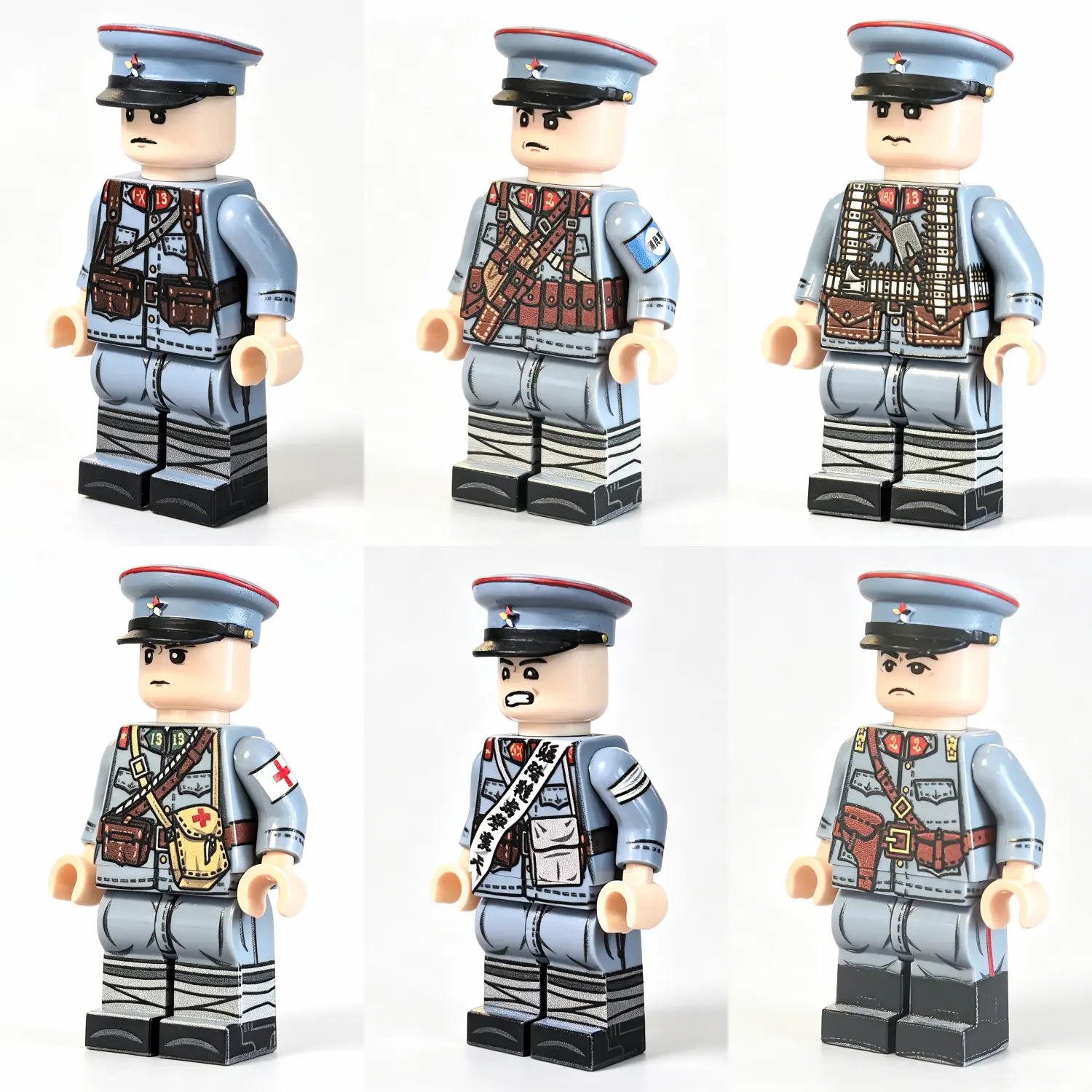
Variations
-
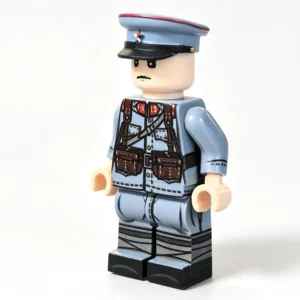
Republic of China Infantryman WWI (Beiyang Army Regular Soldier – Allied Powers) (Without Cap) – Custom Printed Brick Block Figure
$14.99 -
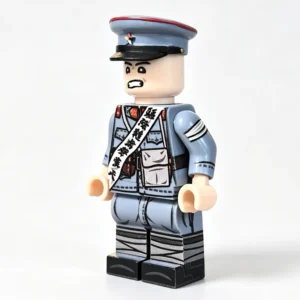
Chinese “War Participation Army” Soldier WWI (Republic of China – Beiyang Government Vanguard) (Without Cap) – Custom Printed Brick Block Figure
$14.99 -
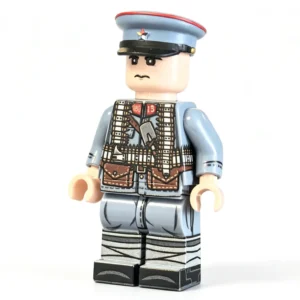
Allied Powers Beiyang Army Support Infantryman (Ammunition Carrier) WWI (Republic of China – Beiyang Government Vanguard) (Without Cap) – Custom Printed Brick Block Figure
$14.99 -
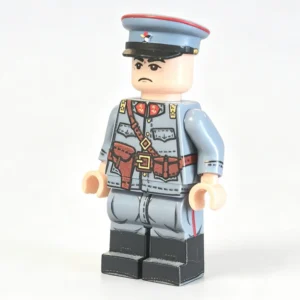
Allied Powers Beiyang Army Infantry Squad Leader (Officer) WWI (Republic of China – Beiyang Government Vanguard) (Without Cap) – Custom Printed Brick Block Figure
$14.99 -
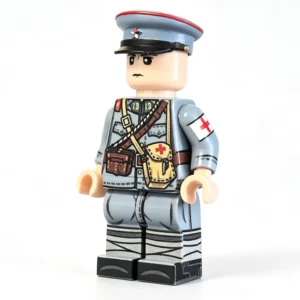
Allied Powers Beiyang Army Combat Medic WWI (Republic of China – Beiyang Government Vanguard) (Without Cap) – Custom Printed Brick Block Figure
$14.99 -

Allied Powers Beiyang Army Assault Soldier (Shock Trooper) WWI (Republic of China – Beiyang Government Vanguard) (Without Cap) – Custom Printed Brick Block Figure
$14.99
Introduction
Please note that these brick figures are all compatible with major standard building blocks.
1. Standard Infantryman / Rifleman (Top-Left)
-
Character Identification: WWI Allied Powers Beiyang Army Standard Infantryman (步兵)
-
Detailed Character Description: This figure represents the backbone of the Beiyang military force. He wears the standard light blue-grey tunic and trousers. On his head is a custom-molded peaked cap (visor cap) featuring a red band, a black visor, and the Five-Colored Star cap badge. His chest features printed brown leather Y-straps supporting dual ammunition pouches on his waist belt. The collar is detailed with red tabs bearing gold unit numerals. His lower legs are wrapped in highly detailed grey/white cloth puttees (leg wraps) that transition into standard black combat shoes. He bears a calm expression with a subtle mustache.
-
Historical Background: The Beiyang Army was the premier, Western-trained military force of the early Republic of China. Their uniforms and gear were heavily influenced by German and Japanese military doctrines of the era. The standard infantryman was typically armed with the Hanyang 88 rifle (a Chinese copy of the German Gewehr 88) and relied on the puttees to keep mud and debris out of their boots during long marches and trench operations.
2. Assault Soldier / Shock Trooper (Top-Middle)
-
Character Identification: WWI Allied Powers Beiyang Army Assault Soldier (突击兵)
-
Detailed Character Description: Designed for close-quarters trench combat, this elite shock trooper has a fierce, determined expression. Layered over his blue-grey uniform is incredibly detailed combat webbing. The standout feature is a diagonal leather strap supporting a printed wooden holster for a Mauser C96 pistol. Beneath this, he wears a heavy chest bandolier made of multiple pouches for stripper clips. On his left arm is a blue armband featuring a white circle with the black Chinese characters “敢死队” (Gǎnsǐduì), marking him as part of a “Daredevil Squad.” His legs feature the standard field puttees.
-
Historical Background: The Gansidui (“Death-Defying Squads”) were elite vanguard units composed of the bravest volunteers, tasked with spearheading dangerous charges against heavily fortified lines. The printed wooden holster highlights the Chinese affinity for the Mauser C96 “Broomhandle” pistol (known locally as the “Box Cannon”). When the wooden holster was attached as a shoulder stock, it turned the pistol into a rapid-fire carbine, providing devastating firepower in narrow trenches.
3. Support Infantryman / Ammo Carrier (Top-Right)
-
Character Identification: WWI Allied Powers Beiyang Army Support Infantryman (支援兵)
-
Detailed Character Description: This figure captures the heavily burdened look of a machine-gun crew member. Over his standard blue-grey tunic, his torso is completely draped in heavy cloth machine-gun ammunition belts. These printed bullet belts cross his shoulders in an ‘X’ pattern and wrap around his waist. A printed combat dagger/utility tool is tucked directly into his chest webbing for quick access. He shares the same Five-Colored Star peaked cap and lower-leg cloth puttees as the standard infantry, but his face is set in a serious, focused scowl.
-
Historical Background: Heavy machine guns, such as the Maxim gun (or local copies like the Type 24), were devastating defensive weapons in WWI but consumed massive amounts of ammunition. Dedicated support soldiers were required to carry dozens of heavy 7.92mm ammunition belts to keep the guns firing during major offensives.
4. Combat Medic (Bottom-Left)
-
Character Identification: WWI Allied Powers Beiyang Army Combat Medic (医疗兵)
-
Detailed Character Description: This figure is easily identifiable by his life-saving equipment. Over his blue-grey uniform, he wears a printed leather harness that supports a yellow canvas medical satchel (first aid bag) slung across his chest, clearly marked with a bold Red Cross. His left arm features a highly visible printed white armband also bearing a Red Cross. His collar tabs are printed in a greenish-grey rather than the standard red infantry color. He wears the standard Five-Colored Star cap, field puttees, and features a clean-shaven, determined face.
-
Historical Background: World War I introduced unprecedented casualties, making the combat medic vital. By this era, the Geneva Conventions had established the Red Cross as an internationally recognized protective emblem for non-combatant medical personnel. When China joined the Allied Powers in 1917, the Beiyang government sought to modernize its military structure, including fielding dedicated medical corps to pull wounded soldiers from the trenches.
5. Patriotic Vanguard / Student Soldier (Bottom-Middle)
-
Character Identification: WWI Beiyang Army Patriotic Vanguard (爱国先锋)
-
Detailed Character Description: This striking figure captures a moment of intense political turmoil. While wearing the standard blue-grey uniform and cap, his face is printed with an angry, yelling expression. Across his chest, he wears a prominent white cloth sash featuring the bold black Chinese characters “誓死收回青岛” (Swear to death to recover Qingdao). He also wears a distinctive white armband with black stripes on his left arm, and an extra canvas utility pouch on his belt. He wears the standard field puttees.
-
Historical Background: This figure represents a pivotal historical moment directly following WWI. Although China joined the Allied Powers and contributed heavily to the war effort, the 1919 Treaty of Versailles awarded Germany’s concessions in China’s Shandong province (including the city of Qingdao) to Japan instead of returning them to China. This sparked massive outrage, leading to the May Fourth Movement. The sash reflects the fierce nationalism and anti-imperialist protests that swept through the Chinese military and student populations at the time.
6. Squad Leader / Officer (Bottom-Right)
-
Character Identification: WWI Allied Powers Beiyang Army Squad Leader (小队长)
-
Detailed Character Description: As the commander of the squad, this figure’s uniform is noticeably cleaner and distinct from the enlisted men. His light blue-grey tunic features printed gold epaulettes (shoulder boards) adorned with stars, signifying his officer rank. Over the tunic, he wears a printed brown leather officer’s harness, similar to a Sam Browne belt, with a diagonal cross-strap and a leather pistol holster attached to the right side. Unlike the puttee-wearing troops, his trousers feature a red stripe (piping) down the outer seam and are tucked into tall, highly polished black leather officer’s riding boots (Jackboots).
-
Historical Background: Junior officers in the Beiyang Army were responsible for direct tactical command on the battlefield. Their distinct uniforms—featuring polished boots instead of cloth wraps, and pistols instead of rifles—were heavily modeled after European officer standards. The Five-Colored Star on his cap represents the “Five Races Under One Union,” the guiding political philosophy and national flag of the early Republic of China from 1912 to 1928.
Reviews
There are no reviews yet.